

Step1
Determine the maximum tire height for your car by looking at your vehicle's owner's manual. Many mud tires are extra large to supply more traction in tough terrain. If you need bigger mud tires than your vehicle can accept, you can have a lift installed and other adjustments made to accommodate them.
Step2
Consider how much on-road driving you expect to do. Most mud tires are designed strictly for off-road use and ride rough and loud on paved roads. There are, however, some mud tires that perform better on paved roads than others and mimic some of the qualities of all-terrain tires.
Step3
Keep in mind that mud tires are designed only for 4x4 vehicles.
Thursday, October 9, 2008


Thursday, September 11, 2008
Mud Tires
Mud tires are required when riders consider off road riding. This means the vehicle is required to traverse rough terrain. Pebbles, mud and stones prove to be only a few of the numerous obstacles that need to be countered. It is obvious that this does not refer to a regular ride or drive but are mostly journeys that are undertaken due to personal preferences or during off road races. The most important consideration in off road racing is to be able to maintain balance and stay upright over irregular and rough terrain. This can actually be quite a simple task when bikers and drivers use mud tires. Apart from undergoing strenuous physical training in order to maintain equilibrium, people need to be attentive towards their tire usage. Together this can help win competitions. The best mud tires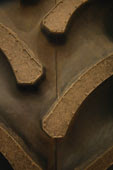 are those that offer maximum clearance and traction. This alone may not help riders because mud tires need to be combined with other compatible components and an accurate vehicle framework.
 are those that offer maximum clearance and traction. This alone may not help riders because mud tires need to be combined with other compatible components and an accurate vehicle framework.
Taller mud tires provide greater clearance below the chassis and differential. Wider mud tires and various special tire tread patterns increase traction. In most cases, mud tires tend to be after market accessories that are fitted in a vehicle as per requirement. When contemplating a mud tire replacement, fender clearance should be kept in mind. Apart from this, people need to be attentive towards selecting a mud tire design that is able to manage utmost up and down travel and side-to-side movement when in use. Mud tread tires along with all terrain tread tires are apt for off road journeys.
Apart from their ability to perform on mud terrains, they are well suited for deep snowy and
 rocky paths. They may not be able to hold ground during rain and can be very unsafe in such conditions. Apart from these hindrances, based upon the tread of a mud tire some designs tend to create a noise when in use. This does not create much of a problem as they are often used on dirt tracks where noise is of least concern to riders.
Tires provides detailed information on Tires, Discount Tires, Snow Tires, Wheels and Tires and more. Tires is affiliated with Tractor Tire Chains.
Article Source: http://EzineArticles.com/?expert=Richard_Romando
Tuesday, September 9, 2008
Mud Tires - 5 Steps to Selecting the Right Tire for Your ATV (Continued)
5) Mud Tires Construction (Ply Rating & Radial or Bias Ply)
This is an area that gets confusing, and is all to often overlooked when purchasing a set of mud tires. All tires are constructed of a special combination of polymers. Each manufacturer typically uses a secret ratio for their product. What you should look at are the ply rating and the belt type construction, as each aspect has an affect on the tire's pliability, stability and handling characteristics.a. Ply Rating - Years ago, (many years ago), a tire's construction was rated by the number of plies within the carcass. This rating system was used when less durable material, (such as traditional rubber) was used to create the tire carcass. Because the material was less durable, it took more layers of bonded, fused material to increase the tire's strength and longevity. However, with the advent of new technologies and materials, a tire can be constructed with only a few (2 or 3) plies of material, yet have the same strength and longevity of a 6- or 7-ply tire. Hence, a new tire may have a 6-ply rating (based on the old standards), yet be constructed with only a couple of layers.b. Radial vs. Bias Ply - Until recently, the vast majority of ATV tires were all bias ply. Bias ply tires are constructed utilizing plies or belts (typically rubber-coated plies composed of textile cords, usually nylon) that run diagonally (usually 30 degrees) from one bead to the other. One ply is set on a bias in one direction, and succeeding plies are set alternately in opposing directions crossing each other. Bias-ply tires are typically less flexible than radials, but are typically tougher in construction than their radial brothers.Radial tires are fairly recent entries in the ATV market, and are tires that are constructed in two parts.
First, a single layer of rubber-coated steel cables arch from one bead to the other to form the tire casing.
Second, numerous rubber-coated steel belts are placed in the crown, under the tread, to form a strong stabilizing unit. Radial construction makes the tire more flexible, which reduces rolling resistance and improves fuel economy.What's the bottom line in selecting tire construction? Try and strike a good balance of ply ratings for your mud tires. Too great of a rating can, but not always, mean a stiffer, less pliable carcass. Too weak of a rating can, but not always, mean too soft of a carcass, and can also mean a weaker tire, one more susceptible to punctures. The jury is still out about the radial vs. bias ply tire construction. For now, we'll stick with the tried and true bias ply until we get some more experience with radial ATV tires.
Where to buy
This may be yet another factor in purchasing a tire, but should not determine the type of tire your purchase. Tires can be purchased at dealerships or retail outlets, as well as on the web. Typically you'll find that the prices of tires are exceedingly higher at dealerships, lower at retail outlets, and somewhere in between on the web. Don't be duped by the low advertised price for tires on the internet though. Shipping costs typically overshadow the perceived money saved on their lower rates.
by Rick Webster
This is an area that gets confusing, and is all to often overlooked when purchasing a set of mud tires. All tires are constructed of a special combination of polymers. Each manufacturer typically uses a secret ratio for their product. What you should look at are the ply rating and the belt type construction, as each aspect has an affect on the tire's pliability, stability and handling characteristics.a. Ply Rating - Years ago, (many years ago), a tire's construction was rated by the number of plies within the carcass. This rating system was used when less durable material, (such as traditional rubber) was used to create the tire carcass. Because the material was less durable, it took more layers of bonded, fused material to increase the tire's strength and longevity. However, with the advent of new technologies and materials, a tire can be constructed with only a few (2 or 3) plies of material, yet have the same strength and longevity of a 6- or 7-ply tire. Hence, a new tire may have a 6-ply rating (based on the old standards), yet be constructed with only a couple of layers.b. Radial vs. Bias Ply - Until recently, the vast majority of ATV tires were all bias ply. Bias ply tires are constructed utilizing plies or belts (typically rubber-coated plies composed of textile cords, usually nylon) that run diagonally (usually 30 degrees) from one bead to the other. One ply is set on a bias in one direction, and succeeding plies are set alternately in opposing directions crossing each other. Bias-ply tires are typically less flexible than radials, but are typically tougher in construction than their radial brothers.Radial tires are fairly recent entries in the ATV market, and are tires that are constructed in two parts.
First, a single layer of rubber-coated steel cables arch from one bead to the other to form the tire casing.
Second, numerous rubber-coated steel belts are placed in the crown, under the tread, to form a strong stabilizing unit. Radial construction makes the tire more flexible, which reduces rolling resistance and improves fuel economy.What's the bottom line in selecting tire construction? Try and strike a good balance of ply ratings for your mud tires. Too great of a rating can, but not always, mean a stiffer, less pliable carcass. Too weak of a rating can, but not always, mean too soft of a carcass, and can also mean a weaker tire, one more susceptible to punctures. The jury is still out about the radial vs. bias ply tire construction. For now, we'll stick with the tried and true bias ply until we get some more experience with radial ATV tires.
Where to buy
This may be yet another factor in purchasing a tire, but should not determine the type of tire your purchase. Tires can be purchased at dealerships or retail outlets, as well as on the web. Typically you'll find that the prices of tires are exceedingly higher at dealerships, lower at retail outlets, and somewhere in between on the web. Don't be duped by the low advertised price for tires on the internet though. Shipping costs typically overshadow the perceived money saved on their lower rates.
by Rick Webster
Subscribe to:
Posts (Atom)

